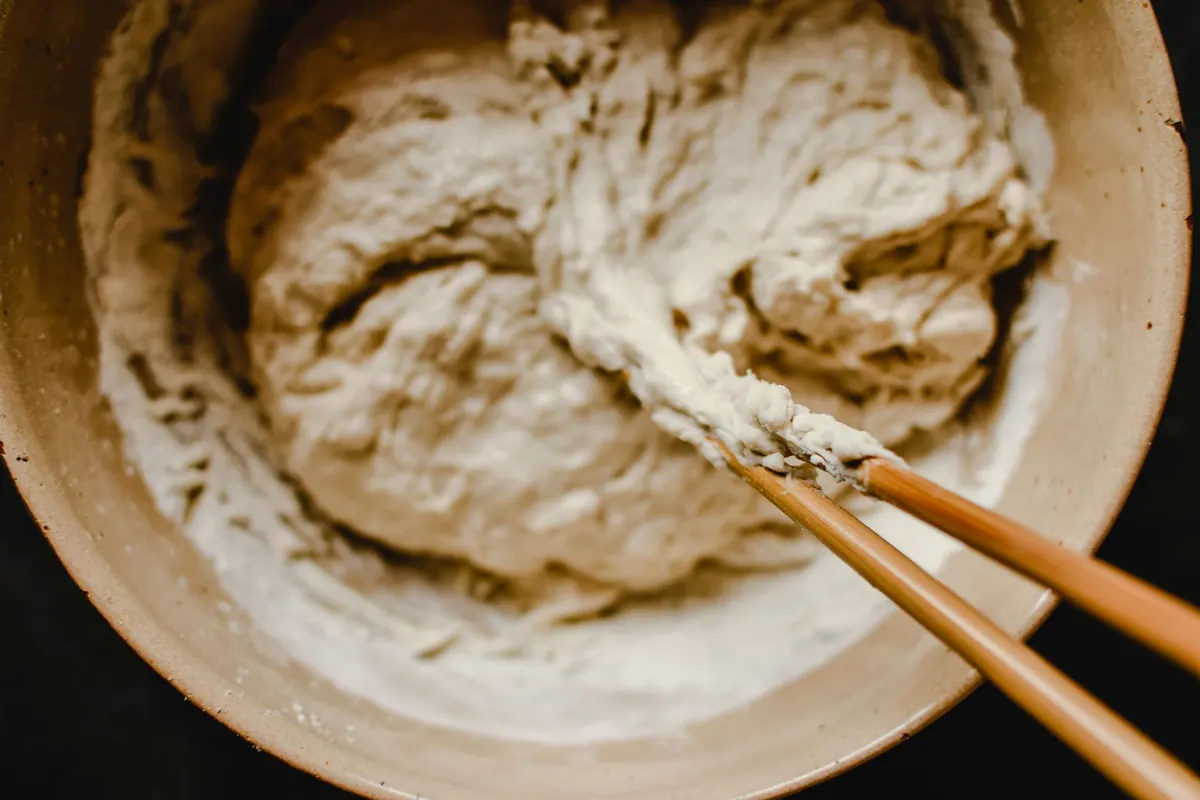
You mix flour and water, come back ten minutes later, and the dough is wearing you. It clings to your fingers, to the bowl, to the counter, and every fold turns into a small argument. Sticky dough is one of the most common complaints in home baking and one of the most misunderstood. Sometimes it means the recipe wants less water. Often it means the dough needs fifteen more minutes of rest, a cooler room, or a firmer hand. The useful skill is working out which of those you're dealing with before you start throwing flour at the problem.
1. Too Much Water, Added Too Fast
Water is what makes dough sticky, so it is the first place to look. But the fix is rarely as simple as pouring less in.
Recipes written as percentages assume a flour that can absorb that much. A dough at 75% hydration in strong bread flour can be lively and manageable; the same percentage in a softer all-purpose flour, on a damp day, in a warm kitchen, drifts towards batter. The dough isn't wrong. The arithmetic is.
Two habits prevent most of it. Hold back roughly 10% of the water at the start, mix the rest until no dry flour remains, then add the reserved water in small splashes after the dough has rested for twenty minutes. Hydrated flour takes water far more willingly than dry flour does. And add water in stages rather than all at once, judging by feel instead of by the number in the recipe.
A quick test: press the dough and pull your hand away. If it leaves a wet, shiny film that never dries on the counter, there is more free water than the flour can hold. If your hand comes away tacky but clean, you are probably fine.
2. Your Flour Is Not the Flour in the Recipe
Two bags both labelled bread flour can behave like different ingredients. Protein content varies — often somewhere between 11% and 14% — and so does the milling, the age of the bag, and how much moisture the flour has picked up in your kitchen. Flour stored in a humid cupboard absorbs water from the air before it ever meets your bowl.
Whole grain flours need special attention. Bran absorbs water slowly and unevenly, and its sharp edges interrupt the gluten network, so a wholemeal dough can feel wet and sticky long after it should have come together. Freshly milled flour brings active enzymes with it, which soften dough faster than you expect.
Keep a small notebook or a note on your phone: brand, protein percentage if it's printed, hydration, and what the dough felt like. When you change flours, change one thing — drop the water by about 5% and see how the dough handles before deciding the recipe is at fault.
3. Under-Kneaded Dough Feels Sticky
Until gluten has formed, wet dough has nothing to hold it together. It smears, it tears when stretched, and it sticks because there is no elastic structure resisting your fingers. This is the stickiness of a dough that has been mixed for two minutes and expected to behave like one mixed for ten.
Before you knead harder, rest. Cover the dough for fifteen to twenty minutes and the flour will hydrate fully and begin organising itself. Then knead or fold with purpose: stretch the dough up and slap it down, or use a series of coil folds with a ten-minute gap between each. You are looking for a dough that stretches thin enough to show light through it without ripping.
If a dough is still sticky after good kneading and a proper rest, the problem is almost always upstream — too much water or a weak flour — and no amount of extra kneading will fix it.
4. Over-Kneading and Dough Temperature
Over-kneading by hand is difficult. In a stand mixer it happens more often than people admit, especially at high speeds, because friction heats the dough as it works. Warm dough ferments faster, feels slack, and turns tacky in a way that has nothing to do with hydration.
Aim to finish mixing with dough that feels cool to the touch. Use cool water in summer, chill your bowl if your kitchen runs hot, and if you own a probe thermometer, check the dough — anything drifting towards the high twenties Celsius is running warm and will get stickier before it gets stronger.
If the dough has already warmed up, give it a short break in the fridge. Twenty minutes of cold rest tightens it noticeably and makes shaping far easier.
5. Fermentation Left Too Long
As dough ferments, acids and enzymes gradually break down the gluten that gave it structure. A dough left too long goes from pillowy to fragile: it spreads, tears instead of stretching, smells sharply sour, and develops a sticky surface that grabs at everything. Watch the dough rather than the clock, particularly in a warm kitchen where bulk fermentation can finish in half the stated time.
Signs you have gone too far:
- The dough no longer holds a dome and flattens within minutes of being shaped.
- It tears in strands rather than stretching smoothly.
- It feels wet on the surface even though you haven't added water.
- A finger pressed into it leaves an indent that does not spring back at all.
An over-fermented dough can still be baked, but treat it gently: shape with a light hand, use a little extra flour on the bench, and get it into a hot oven without delay.
6. Salt and Starter: The Small Ingredients
Salt tightens gluten and controls fermentation, and a dough mixed without it feels slack, sticky and oddly lifeless. If a dough seems wrong in a way you can't name, taste a pinch. It's a two-second check that saves an entire bake.
Add salt early and evenly. Sprinkling it on at the end without mixing thoroughly leaves concentrated pockets that both toughen and weaken the dough around them. And don't forget the water hiding in your starter: a wet levain at 125% hydration adds considerably more liquid than a stiff one, and it counts towards the total. If you keep a liquid starter and switch from a stiff levain, expect the dough to feel looser.
7. How You Handle It Matters
Sticky dough often becomes stickier the more you fight it. Dry flour on the bench absorbs water slowly and does little in the moment; wet hands, a bench scraper and quick, confident movements do far more. Keep a small bowl of water beside you, wet your hands rather than flouring them, and use the scraper to lift and turn instead of pulling with your fingers.
Keep the added flour to a minimum. A tablespoon or two during shaping is normal; half a cup changes the recipe and leaves you with a dry, tight loaf that was never the problem in the first place. For very wet doughs, a light dusting of rice flour on the banneton and the top of the dough releases cleanly without being absorbed.
A Five-Minute Fix-Up Routine
When a dough turns sticky mid-bake, work through this before doing anything drastic.
- Stop adding flour. Put the bag down and cover the bowl.
- Rest for fifteen to twenty minutes. Many sticky doughs simply needed time to hydrate.
- Check the temperature of the dough and the room. Warm dough is slack dough.
- Do two or three sets of folds with ten minutes between them. If it tightens, the gluten was underdeveloped.
- If it is still loose after the folds, work in a tablespoon of flour at a time, and no more than three.
- Write down what happened, and adjust the water by 5% on the next bake.
One last thing worth remembering: some doughs are supposed to be sticky. High-hydration country loaves and ciabatta are wet by design, and a dough you can barely handle is often the one that gives you the open crumb you were after. Learn the difference between a dough that is wet and a dough that is struggling, and your hands will tell you before the recipe does.
Photo: Eva Bronzini / Pexels