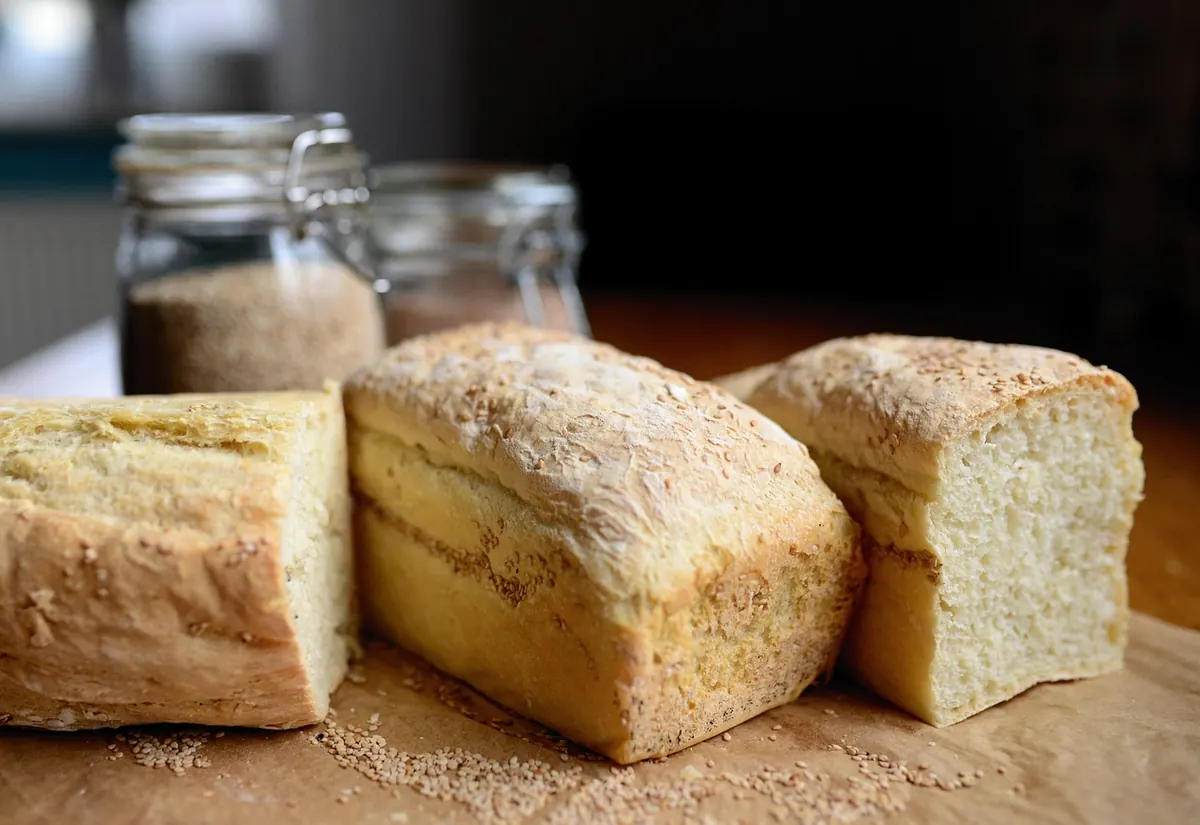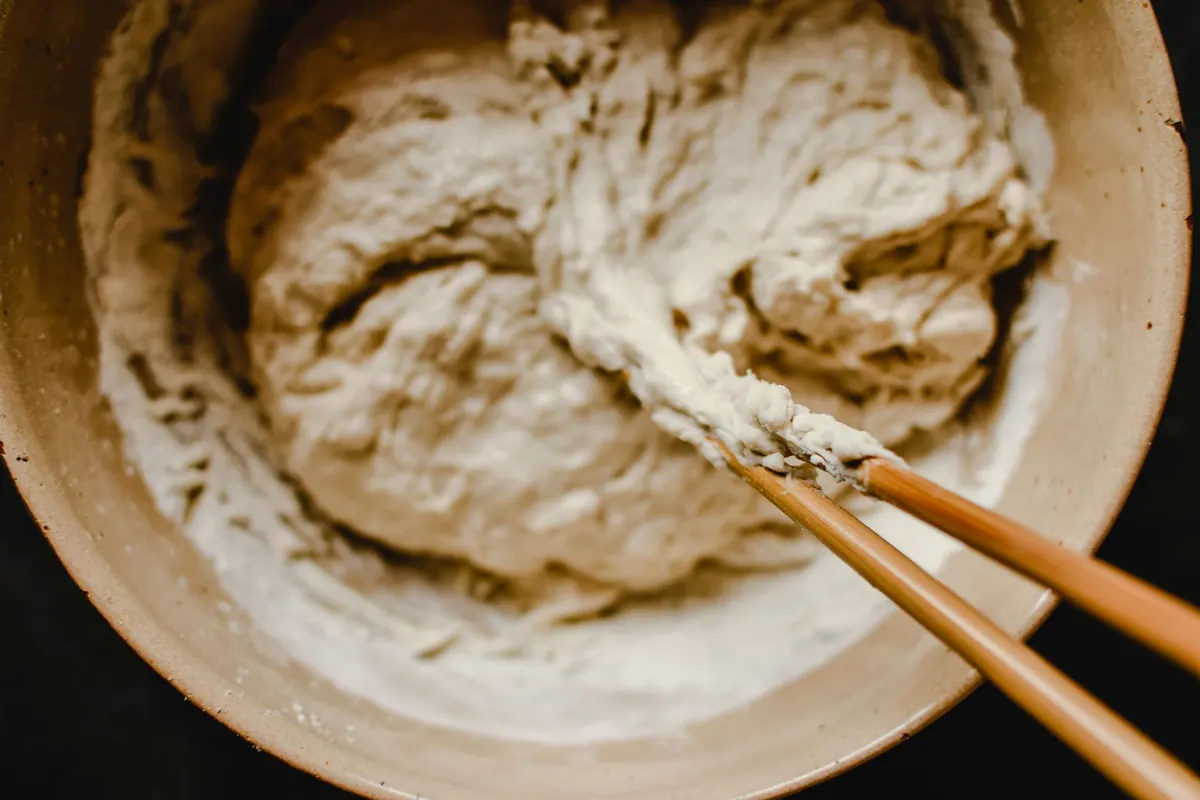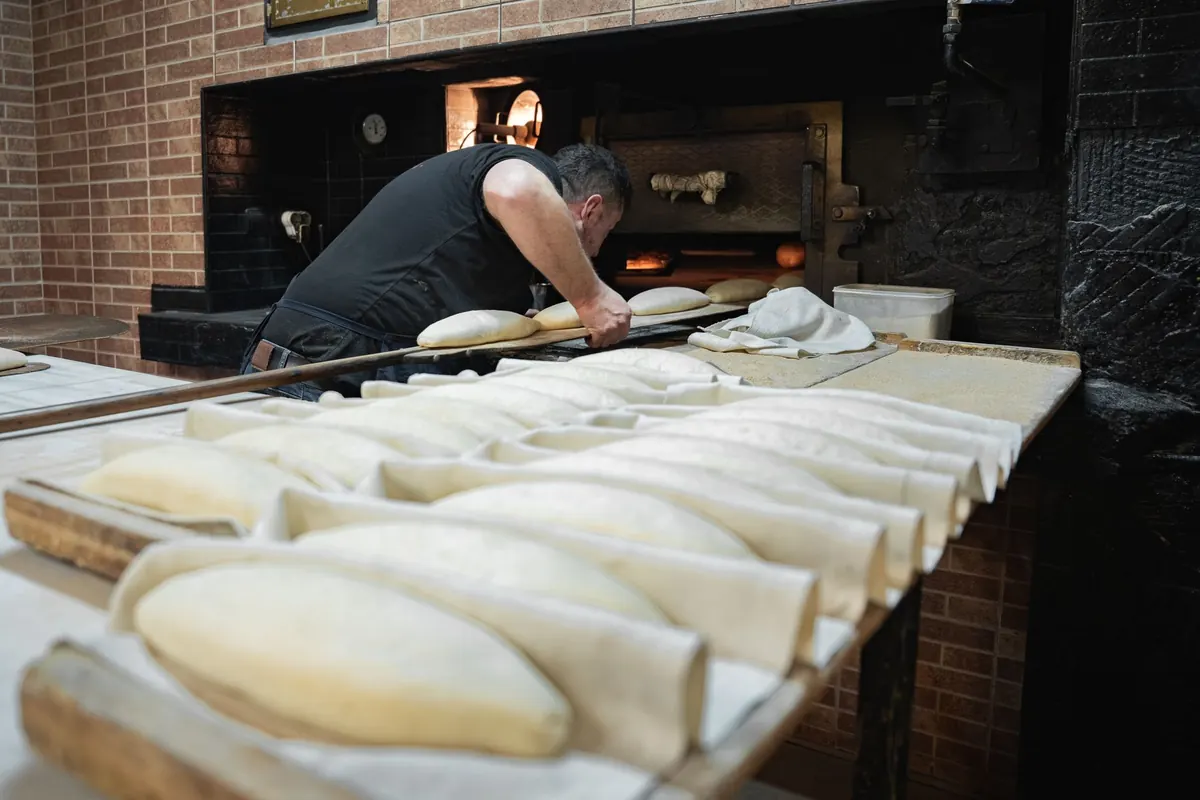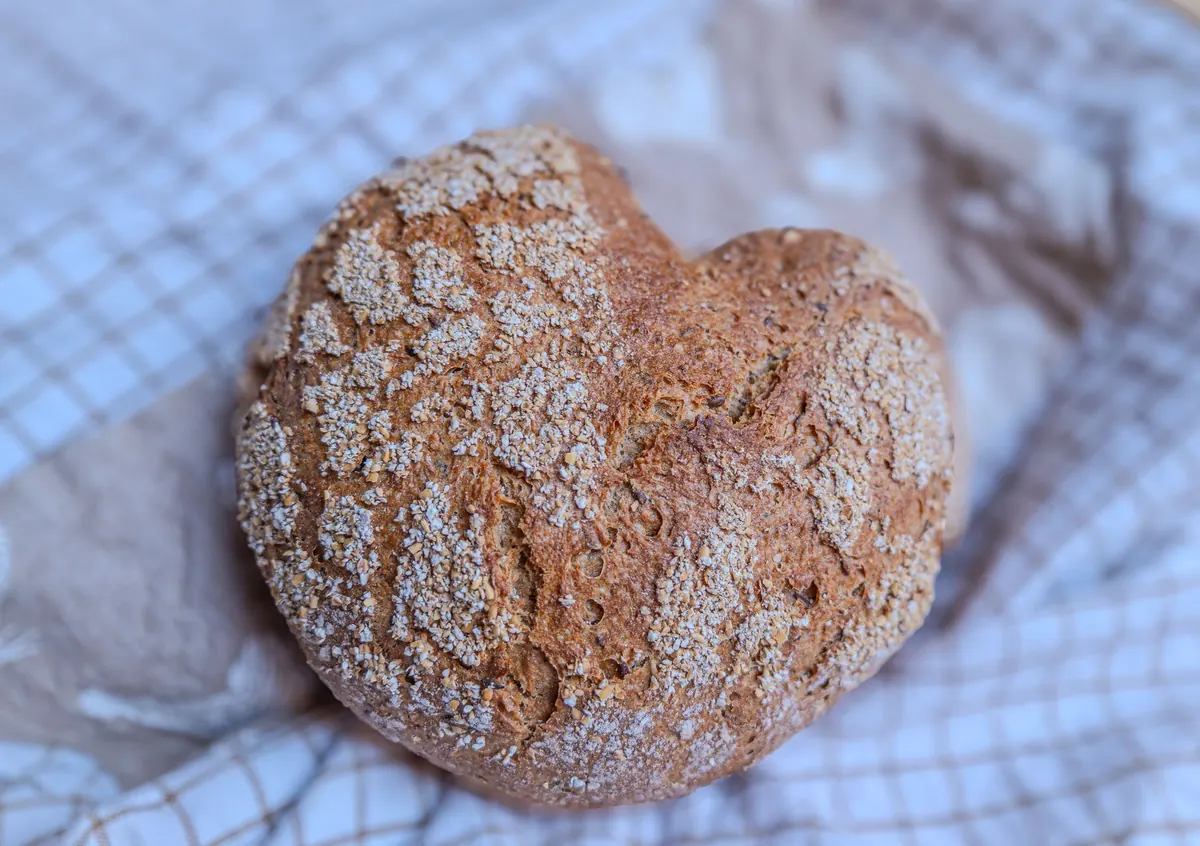
A loaf goes into the oven pale and tight and comes out brown, cracked and hollow-sounding. Everything between those two moments — how fast heat reaches the surface, how long the crust stays wet, how evenly the base cooks — decides whether you get a thin, glassy shell that crackles as it cools or something closer to a brick. The Dutch oven and the open oven solve that problem in opposite ways. Both can produce excellent bread; what changes is the style of crust, the amount of attention the bake demands, and how many loaves you can move through the oven in one morning.
What each setup is actually doing
A Dutch oven is a sealed chamber. You preheat the pot and lid for a good 40 to 45 minutes at around 250 °C (480 °F), then lower the dough in — a parchment sling makes this far less frightening — and put the lid back on. For the first 20 minutes or so, the moisture leaving the dough has nowhere to go. The loaf bakes inside its own steam. When you take the lid off, that same heavy pot turns into a small, fierce, radiant oven that browns the crust fast.
An open oven is a leaky room. Heat arrives from the elements above and below, a stone or steel gives the base some stored energy to draw on, and any steam you introduce drifts out through the vents within minutes. You are not creating a sealed atmosphere, you are trying to slow the drying of the surface long enough for the loaf to finish expanding. It works, but it takes deliberate effort.
Crust: colour, shine and crackle
This is where the two methods part company most visibly. Bread baked covered comes out with a thin, blistered, slightly glossy shell. The surface stays wet long enough for the starches to gelatinise fully and the sugars to develop, and then the dry heat of the uncovered phase drives browning hard. If you bake cold, retarded dough straight from the fridge, the blisters are often dramatic — small beads of moisture on a cool surface are exactly what you want.
Bread baked in the open, with steam done well, can look almost identical. Most home bakers, though, land somewhere slightly different: a matte, thicker, more rustic crust that is a touch chewier and takes longer to soften. Without any steam at all, the surface sets within the first few minutes, the loaf stops expanding where it should have torn open, and you get tight, tidy scoring and a crust that borders on leathery.
One practical side effect is worth knowing. Because steam keeps the crust supple, a covered bake forgives a slightly shallow slash. In an open oven the surface firms up quickly, so you need decisive, deep cuts made at a shallow angle, and you need to get the loaf in fast.
Steam, and why it carries the whole argument
If you take one thing from this comparison, make it this: the Dutch oven's real advantage is not cast iron, it is humidity. Given genuinely good steam, an open oven closes most of the gap.
Ways to build steam in a normal oven:
- Boiling water in a preheated metal pan on the oven floor, poured in the moment before you load the bread. Volumes of steam, immediately.
- Ice cubes thrown onto a hot tray at the bottom of the oven. Slower, gentler, safer to handle.
- A spray bottle used on the loaf and the oven walls just before closing the door. Fine as a top-up, weak on its own.
- An inverted stainless bowl placed over the loaf for the first 15 minutes. This is a Dutch oven in all but name, and it is the cheapest trick on the list.
Whatever you choose, keep the oven door shut for the first 15 minutes. Every peek costs you heat and steam you cannot get back.
How the two setups behave as ovens
A loaded Dutch oven drops in temperature and recovers quickly, because cast iron holds a lot of heat and radiates it from every side. The result is an even bake with strong oven spring, but also a base that can scorch. If your loaves come out with a black, bitter bottom, slide a baking sheet onto the rack underneath the pot, or move the pot up one level.
An open oven is less even. The top element browns aggressively, the back corner runs hotter than the front, and the stone gives you a hot base with a cooler top. Expect to rotate the loaf after 15 to 20 minutes and to manage the last stretch by eye rather than by timer. A baking steel or a thick stone is close to essential here; without stored heat underneath, the base stays pale while the top overbakes.
Convenience, safety and the shape of your day
Both methods have real costs, and they are not the ones usually listed.
- Dutch oven, time: a 45-minute preheat is not optional. A cold pot gives you a pale, flat loaf.
- Dutch oven, capacity: one loaf at a time, and only shapes that fit. Long batards and baguettes are out.
- Dutch oven, handling: a 250 °C cast iron pot is genuinely dangerous. Set it on a heatproof surface, keep dry cloths away from it, and use a sling rather than your fingers.
- Open oven, throughput: two or three loaves on a steel at once, plus a tray of rolls. For baking in quantity, this wins outright.
- Open oven, steam management: water and hot elements make a lot of steam and a lot of splashing. Pour from a jug with a spout, wear long sleeves, and keep your face back.
When the open oven is the better call
Reach for the open oven when you are baking more than one loaf, when the shape is long or flat, when you want a dark, robust, country-style crust rather than a glassy one, or when you are making focaccia, ciabatta or anything that bakes on a tray. It is also the sensible choice for very large loaves: a 1.5 kg miche does not fit comfortably in most domestic pots, and cramming it in gives you a loaf with pale, pressed sides.
Practical notes for either method
- Preheat properly and for longer than feels reasonable — 45 minutes for a pot, 45 to 60 for a stone or steel.
- Bake from cold. A retarded loaf holds its shape, scores cleanly, and blisters better in steam.
- Stay in the 230 to 250 °C range (450 to 480 °F) for the first phase, then drop to around 220 °C (430 °F) to finish.
- Take the lid off, or the steam away, at roughly the 20-minute mark, once the loaf has stopped growing.
- For a crisper crust, finish the last 5 to 10 minutes with the oven door slightly ajar, or cool the loaf on a rack in a switched-off oven with the door open.
- Check the centre with a thermometer if you are unsure: 96 to 99 °C (205 to 210 °F) means it is done.
- Wait. Cutting hot bread ruins the crumb you spent two days building.
A simple way to choose
If you bake one loaf at a time and want the most reliable path to a thin, blistered crust, use the Dutch oven and do not overthink it. If you bake in batches, favour long shapes, or want to learn to read your oven properly, put a steel in the middle and a tray of boiling water at the bottom, and practise until the steam phase feels routine. Many home bakers end up with a hybrid: 20 minutes covered in the pot, then the loaf finished uncovered on the stone. It borrows the best of both, and the bread comes out the same way every week.
Photo: Sabine Freiberger / Pexels