There is a moment in most baking weeks when the clock wins. You want bread, but the day has other plans: a late train, a school pickup, a phone call that eats an hour. That is usually when no-knead shows up, promising a loaf while you sleep. It is a fair promise, mostly. But it is not the only road to good bread, and it is not always the better one.
Both methods end in the same place: a crust that crackles when you press it and a crumb worth tearing apart with your hands. They get there differently, and which one suits you has less to do with skill than with the shape of your week.
Two Methods, One Dough
The ingredients are identical: flour, water, salt, yeast. What changes is how the gluten network gets built.
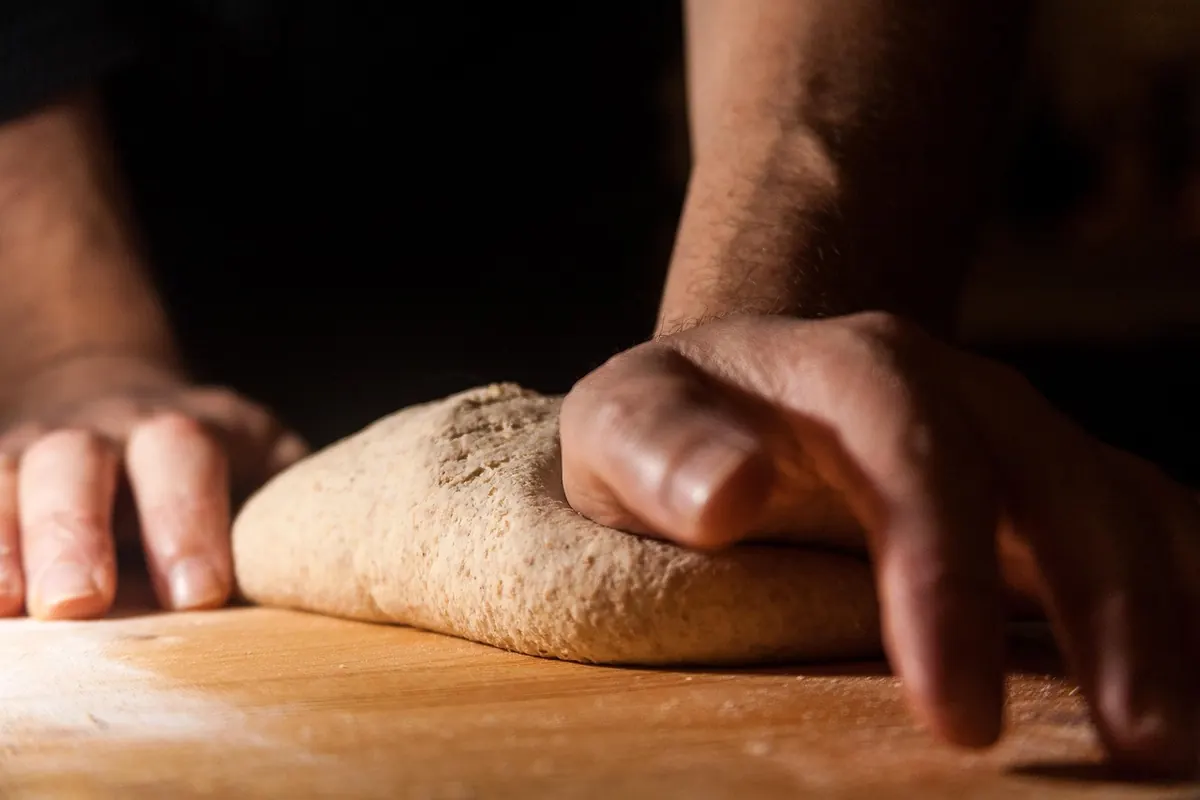
In traditional kneading, you work the dough on a counter for roughly eight to twelve minutes. Push, fold, turn, repeat. The dough goes from shaggy and sticky to smooth and elastic, and the gluten develops through mechanical force. It is direct, physical, and quick in calendar terms.
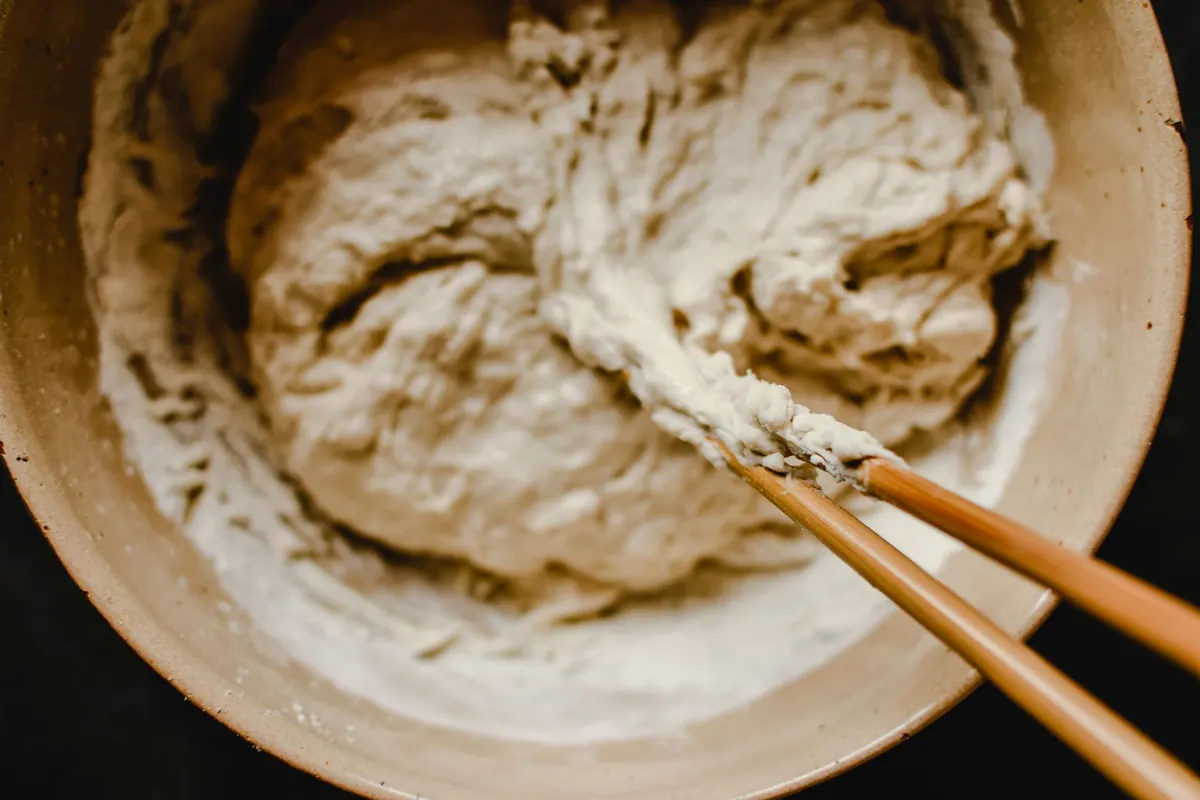
In no-knead baking, a method that spread widely in the 2000s but is older than any of us, you stir everything together with a spoon or dough whisk until no dry flour remains, cover the bowl, and walk away. A long fermentation, typically twelve to eighteen hours at room temperature, lets enzymes and time do what your hands would have done. Many bakers add three or four brief sets of folding during that rest to help the structure along, which takes about thirty seconds each.
Time: Hands-On Minutes vs. Calendar Hours
A kneaded loaf is a same-day project. Mix and knead for about fifteen minutes, bulk ferment for one to two hours, shape, proof for forty-five to sixty minutes, then bake for forty. Start at nine in the morning and you are eating warm bread by early afternoon. Of that four-hour window, maybe twenty-five minutes is actually you, working.
A no-knead loaf is a next-day project. Five minutes of mixing at nine at night, a long rest overnight, fifteen minutes of shaping the following morning or evening, a one-to-two-hour second proof, then the same forty-minute bake. Total hands-on time: about twenty minutes. Total elapsed time: close to twenty hours.
This is where people misread the method. No-knead is not faster. It is more forgiving of your absence. You can mix it, go to work, come back, and the dough is fine, often better. With a kneaded loaf, a forgotten bowl at the two-hour mark can mean an overproofed, slightly collapsing dough by the time you remember it.
Effort and Skill: What Your Hands Are Doing
Kneading is real physical work, and not everyone wants it. Ten minutes of pressing and folding is pleasant for some bakers and hard on wrists, shoulders, or hands with limited grip strength. No-knead asks almost nothing of your body.
The equipment list is not dramatically different, but it is different:
- No-knead: a large bowl, a spoon or dough whisk, plastic wrap or a plate, a heavy oven-safe pot with a lid, parchment paper, and a bench scraper. The pot matters, since trapping steam is what gives the loaf its rise and shine.
- Traditional: a clean counter, a bowl, a scale, a tea towel, and a baking stone or tray if you have one. A stand mixer with a dough hook shortens the kneading, though it is not required.
Skill is subtler. Kneading teaches your hands what developed dough feels like: the tackiness, the resistance, the way it springs back. Bakers who only ever use the no-knead method sometimes struggle later to judge when a dough is ready.
But no-knead has its own learning curve, and it is hiding in the shaping. A high-hydration dough, often 70 to 75 percent water, sticks to everything. Wet your hands, work quickly, use flour on the cloth, and keep a bench scraper close. Shaping a slack dough into a tight boule is genuinely harder than kneading it would have been.
Texture and Flavour: What Each Method Puts on the Table
The crumb
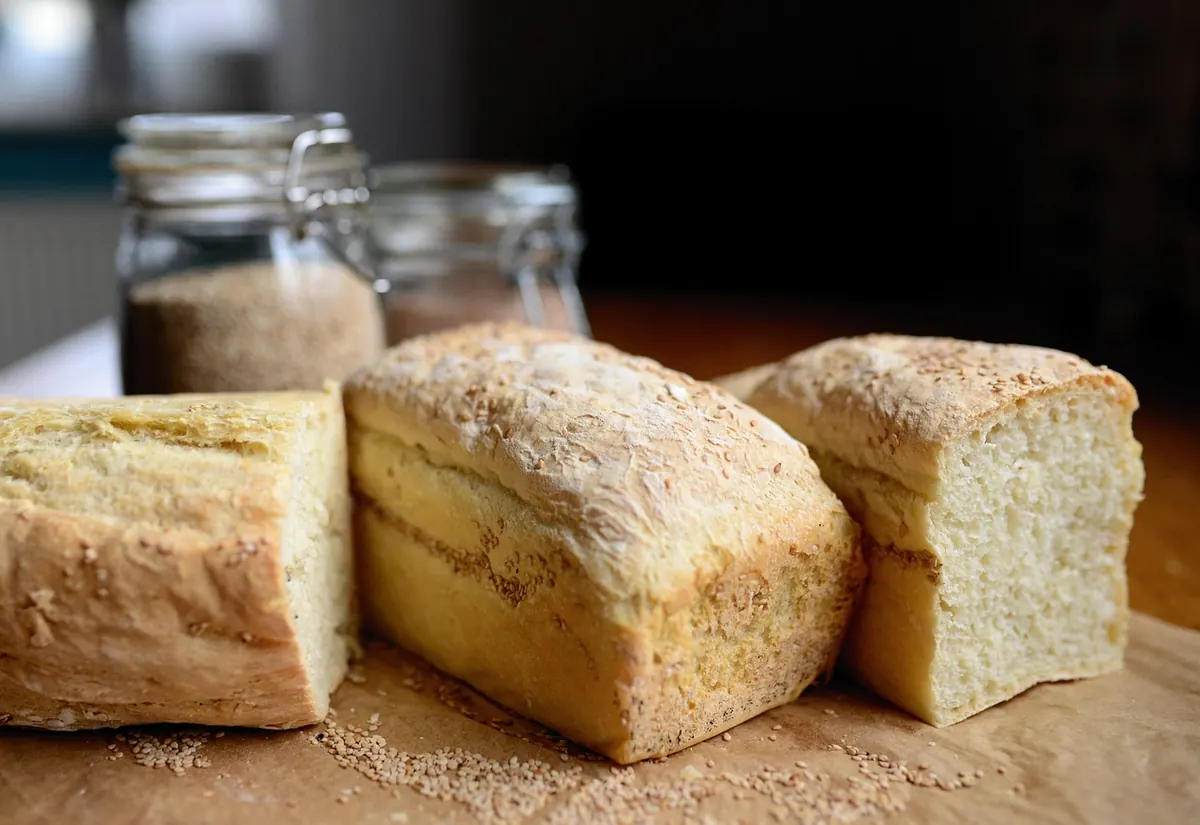
No-knead loaves tend toward an open, irregular crumb with larger holes and a slightly custardy interior. Kneaded loaves, particularly at lower hydration, give a more even crumb that slices neatly for sandwiches and toast. If you want thin, uniform slices that hold a lot of filling, a kneaded dough is easier to control.
Crust and flavour
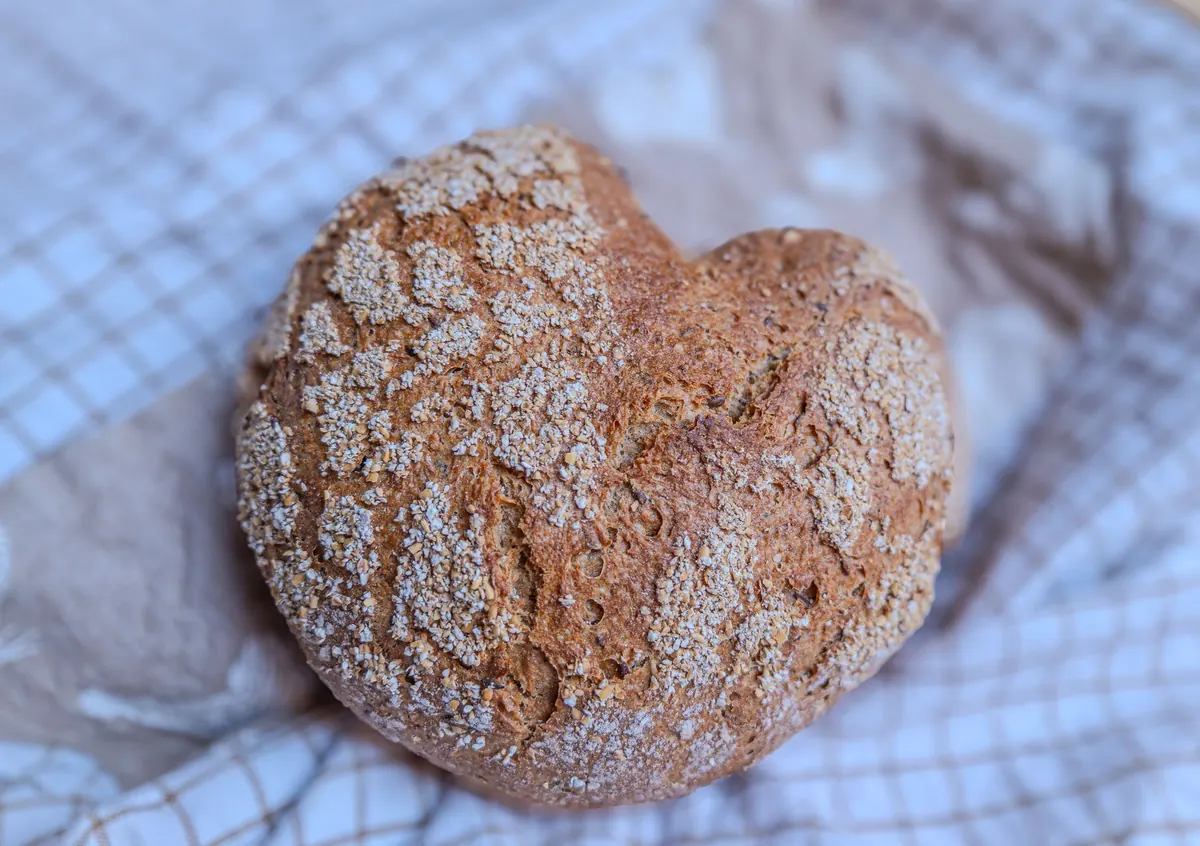
The long fermentation behind no-knead bread builds flavour almost on its own, often with a faint tang even when you use ordinary instant yeast. Baked in a covered pot, the trapped steam produces a dark, blistered crust with very little effort.
Kneaded bread is milder by default, but the gap closes quickly. A poolish or biga made the night before, or an overnight rest of the shaped dough in the refrigerator, gives you most of that depth while keeping the same-day rhythm. Kneaded dough is also the practical choice for enriched recipes: buns, braids, brioche, sandwich loaves, and anything with butter or sugar in it.
Reliability: Which Loaf Goes Wrong Less Often
Kneading is more predictable in the short term. You can feel when the gluten is ready with the windowpane test: stretch a small piece thin enough to see light through it. Timings are short, so there is less room for drift. The usual failures are adding too much flour while kneading, which makes a dense loaf, or stopping too early and getting a crumbly one.
No-knead is more forgiving of time, but it is sensitive to temperature. A twelve-hour rest in a warm kitchen can overproof; in a cold one it may need eighteen or twenty. Watch the dough rather than the clock. Check at ten hours: it should be doubled, domed, and bubbly at the edges. If it has flattened and smells sharply of alcohol, it has gone too far, and a quick reshape and bake will still usually give you something decent.
A few adjustments help: use cooler water in summer and lukewarm water in winter, aim for a room around 20 to 22°C, and keep a note of what you did. Two or three bakes will teach you more than any set of instructions.
Matching the Method to Your Week
- Choose no-knead when you are out of the house for ten hours, when you want bread for a weekend breakfast without getting up early, when your hands or shoulders need a break, or when you have no mixer and no patience for scrubbing a counter.
- Choose traditional kneading when you want bread today, when you are making rolls, braids, or enriched doughs, when you would rather learn dough by feel than by timer, or when dinner guests arrive at seven and you started thinking about bread at one.
- Or use both. Knead a dough for five or six minutes, then let it rest in the refrigerator for twenty-four hours. You get the flavour of a long fermentation with the structure and shaping ease of a kneaded loaf, and you split the work across two short sessions.
Start Where Your Schedule Is
If this is your first no-knead loaf, begin simply: 400g bread flour, 300g water, 8g salt, and about a quarter teaspoon of instant yeast. Stir it together in the evening, cover the bowl, and leave it on the counter overnight. Shape it the next day, let it proof while the pot heats, and bake it at 240°C in a covered pot for about thirty minutes, then uncovered until it is deep brown. Write down the room temperature and how long it rested.
If you have a free afternoon, knead a dough instead. Pay attention to how it changes under your hands, and bake it in the same pot. Two loaves, made a week apart, will tell you more about your own preferences than any comparison can. Then keep both methods in your rotation. There are weeks for long fermentations and weeks for a quick knead, and good bakers use whichever one the calendar allows.
Photo: giulioperricone / Pixabay